Showing posts with label Books. Show all posts

Tuesday, May 6, 2014

Top Ten Book Covers I'd Frame


I don't normally do these top ten Tuesdays, but this week's topic I just couldn't resist, since I love cover design so much.

 Girl In Hyacinth Blue by Susan Vreeland, Cover Design by Maggie Payette


The Golem and the Jinni by Helene Wecker


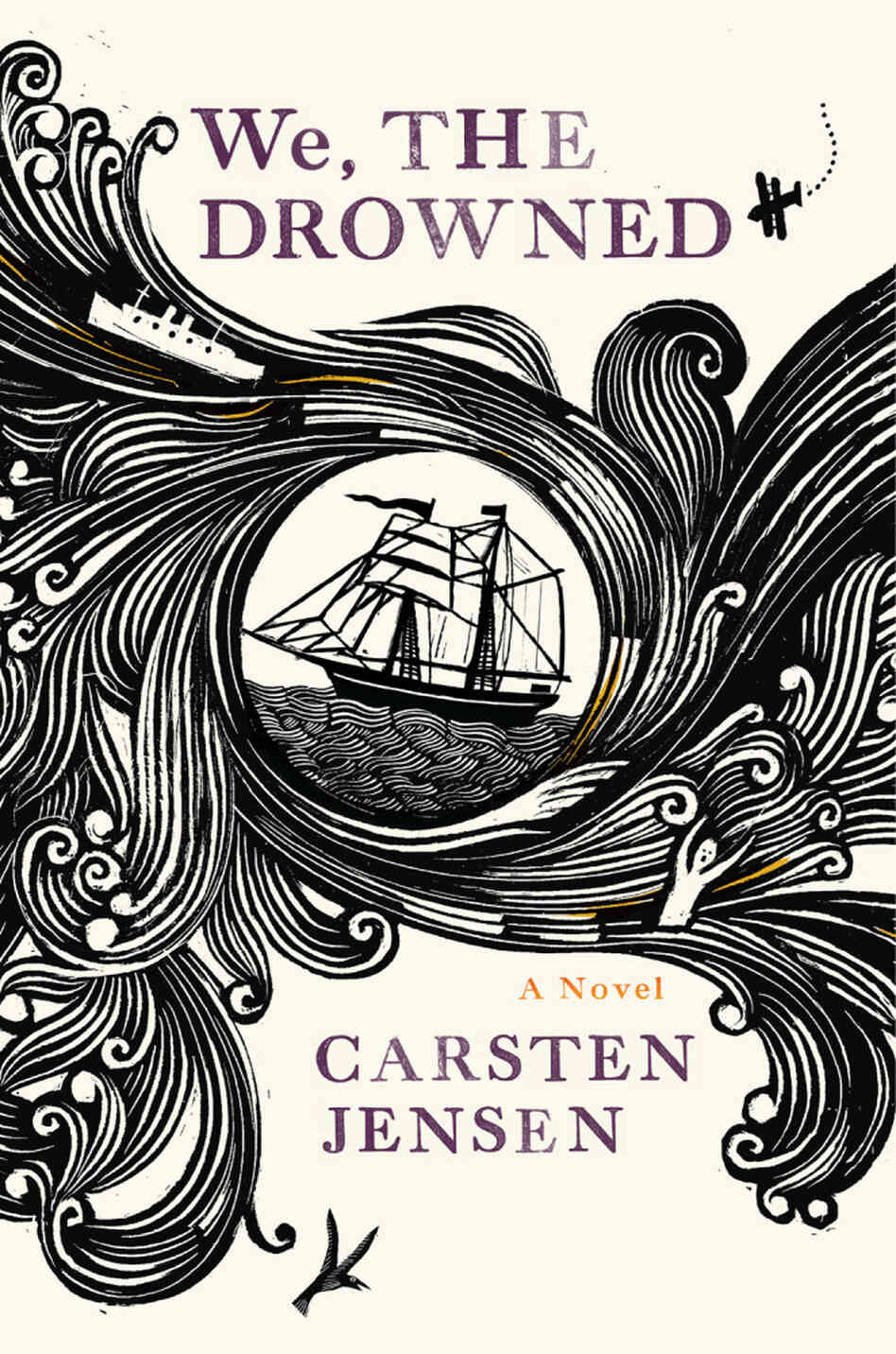
We the Drowned by Carsten Jensen, Cover by Suzanne Dean


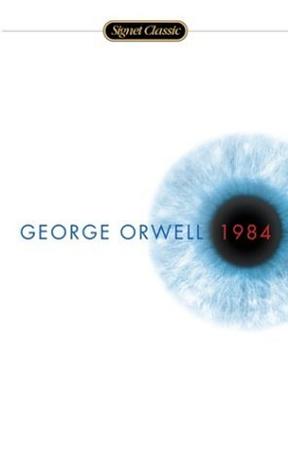
Animal Farm and 1984 by George Orwell, Signet Classics


Farenheit 451 by Ray Bradbury, Art Student Cover
I don't actually own this one, but I really wish I did.


Button Man by Paul Lyons


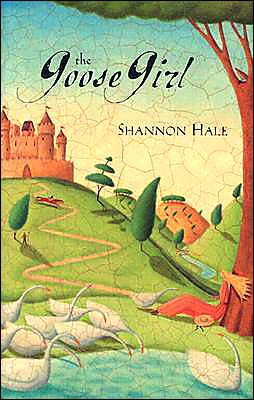
The Goose Girl by Shannon Hale


The Catcher in the Rye by J.D. Salinger


The Mambo Kings Play Songs of Love by Oscar Hijuelos


Tuesday, April 29, 2014

Madrid Book Haul


I'm home from Spain! Honestly, the whole experience was wonderful and felt like some kind of dream, and I'll definitely be talking more about my adventures when I post my pictures from the trip. But first things first, books.
I was wandering around in Madrid with a couple of friends, and fate happened. We were walking down a street off the Plaza Del Sol and I was complaining that all I had seen were souvenir shops and generic clothing stores when I looked to the left and BAM. A scene straight from Tumblr. Right off this big street there was a little stone alley, and set up on it was a used book stall. It had all of these old Spanish books, shelves and tables of them, along with watercolors and vintage photographs. Literally when I saw it I stopped dead in the street and gasped. I was really sad at first since all the books appeared to be in Spanish and I am a french-speaker, but then I saw a little box labeled "Frances", filled with all of these old French books. Needless to say, at this point I pretty much flung all the money I had at the lady who owned the store.


I ended up with four books: Coeur au Zenith by Louis Bauguion, L'Iris De Suse by Jean Giono, A La Recherche de L'Unite by E. Techoueyres, and La Petite Fille Au Bout De Chemin by Laird Koenig. I'm in love with the packaging of old French books: they're very understated, and the pages are suchhhhh nice quality.


Coeur Au Zenith is quickly becoming one of my favorite books physically that I own. I love the parchment paper wrapping and the simple text on the front and spine. It was published in 1934, and it's sort of crazy to me that I have a book in my hands that was made in France almost a century ago. There's something about the phrase at the beginning, "Vivre seul au monde" (to live alone in the world) that speaks to me. It captures that feeling you sometimes get when you realize however close you get to people, there will always be a separation between you and them, that at the end of the day it is only you. It's hard to put into words but I think the phrase, especially in French, comes as close as possible.


This book was published in 1970. I actually have no idea what it's about; the cover flap seemed to be talking about a flower and then lapis lazuli and then architecture and then the invention of zero, so I guess I'll just find out when I read it.


This book seems to be a philosophy book, which I'll never say no to. It was published in 1937, and the pages are all browned around the edges. I just love feeling the paper, it's such nice quality.


This book was actually written in English first and translated to French. The French edition was published in 1974. It's a thriller about a thirteen year old girl who lives alone on Long Island with her dad, and doesn't go to school. It should be pretty fun to read and maybe after I finish it I'll get the English edition to compare. I love reading in French because there are some ways that ideas are said that just can't be translated to English, or that present things in a little bit of a different way. One of my favorite examples is that you would say quelqu'un me manque, instead of I miss something. Something is doing the missing to you. It's a little bit of a different idea, and it's really fun to find things like that in another language.

My pictures from Spain will be up soon, so stay tuned for those!


Saturday, August 10, 2013

Library Book Sale


Every year my town has a library book sale of donated books, so early this morning I made my way down there to check out the offerings. I only took thirteen dollars because if given the chance I have no doubt I would blow all my savings on used books. I ended up with a selection of five paperback and one hardcover, all which I got for eight dollars.


The books I ended up with (there was much editing done before I got to the cashier) were:

Red Dragon by Thomas Harris
Girl in Hyacinth Blue by Susan Vreeland
The Stillborn God by Mark Lilla
East of The Sun by Julia Gregson
A Separate Peace by John Knowles
The Accidental Masterpiece by Michael Kimmelman


"In the realm of psychological suspense, Thomas Harris stands alone. Exploring both the nature of human evil and the nerve-racking anatomy of a forensic investigation, Harris unleashes a frightening vision of the dark side of our well-lighted world. In this extraordinary novel , which proceeded The Silence of The Lambs and Hannibal, Harris introduced the unforgettable character Dr. Hannibal Lecter. And in it, Will Graham--the FBI man who hunted Lecter down-- risks his sanity and his life to duel a killer called...
The Red Dragon"
I'm not really into the whole FBI murder mystery type of book, but I've wanted to read this ever since NBC's Hannibal came out-- it's one of my favorite shows and I just think it was done so excruciatingly well. (To hear me gush more, click here) The plot and ideas in the show were great, especially the way Hannibal and Will Graham's relationship was portrayed, so I wonder if that's drawn from the book or Bryan Fuller's own genius. I'm excited to get through this so I can compare to the show.


(Excuse my dangly hair)

"A professor invites a colleague from the art department to his home to see a painting that he has kept secret for decades. The professor swears it is a Vermeer--why has he hidden the important work for so long? The reasons unfold in a series of stories that trace ownership of the painting back to World War 2 and Amsterdam, and still further back to the moment of the work's inspiration. As the painting moves through each owner's hands, what was long hidden quietly surfaces, illuminating poignant moments in human lives. Vreeland's characters remind us, through their love of the mysterious painting, how beauty transforms and why we reach for it, what lasts, and what in our lives is singular and unforgettable."
Even though people preach not to judge a book by it's cover, I couldn't help it with this one; I love the blue and the little picture window. I picked this book because of the art history aspect, but also because it seems to be the type of book I like best; not very dramatic, relaxed and contemplative, asking questions about human nature, life, beauty, but not necessarily answering them. And it involves a professor--- I have a weakness for any insight into the lives of professors *see: my obsession with The Rebel Angels by Robertson Davies*


"The wish to bring political life under God's authority is nothing new, and it's clear that today religious passions are again driving world politics, confounding expectations of a secular future. In this major book, Mark Lilla reveals the sources of this age-old quest--and it's surprising role in shaping Western thought. Making us look deeper into our beliefs about religion, politics, and the fate of civilizations, Lilla reminds us of the modern West's unique trajectory and how to remain on it. Illuminating and challenging, The Stillborn God is a watershed in the history of ideas."

I really had trouble exercising self-control in the philosophy/religion section. I basically wanted to carry the whole table home-- but alas, my thirteen dollars. So I settled on this- combining religion, philosophy, and politics. I was remembering history class this year, learning how the Constitution and early government was built on Judeo-Christian ideas. I think it'll be a good read for when I'm not in the mood for fiction.


"As the Kaisar-i-Hind weighs anchor for Bombay in the autumn of 1928, it's passengers ponder their fate in a distant land. They are part of the "Fishing Fleet"-- the name given to the legions of Englishwomen who sail to India each year in search of husbands, heedless of the life that awaits them. The inexperienced chaperone Viva Holloway has been entrusted to watch over three unsettling charges. There's Rose, as beautiful as she is naive, who plans to marry a cavalry officer she has met a mere handful of times. Her bridesmaid, Victoria, is hell-bent on losing her virginity en route before finding a husband of her own. And shadowing them all is the malevolent presence of a disturbed schoolboy named Guy Glover. 
From the parties of the wealthy Bombay socialites to the poverty of Tamarind Street, from the sooty streets of London to the genteel conversation of the Bombay Yacht Club, East of The Sun  is graced with lavish detail and a penetrating sensitivity---historical fiction at it's greatest."

I originally picked up this book because the title reminded me of the story East of the Sun West of the Moon. I'm not sure if this book relates to that at all, but the story on the back cover sucked me in-- set in an interesting place in an interesting time with interesting people. I don't really expect this book to be all that deep or English-class material, but it sounds like the kind of book I could read just to relax and hear a great story. 


"Set at a boys' boarding school during the early years of World War 2, A Separate Peace  is a harrowing and luminous parable of the dark side of adolescence. Gene is a lonely, introverted intellectual. Phineas is a handsome, taunting, daredevil athlete. What happens between two friends one summer, like the war itself, banishes the innocence of these boys and their world."

I bought this one because I had heard a lot about and I'm also pretty sure I'll have to read it for school sometime in the future. 


Monday, July 22, 2013

The Mambo Kings Play Songs of Love by Oscar Hijuelos


"It's 1949. Two young Cuban musicians make their way up from Havana to the grand stage of New York. It is the era of the mambo, and the Castillo brothers, workers by day, become by night stars of the dance halls, where their orchestra plays the lush, sensuous, pulsing music that earns them the title of Mambo Kings. This is their moment of youth-- a golden time that thirty years later will be remembered with nostalgia and deep affection. In The Mambo Kings Play Songs of Love, Oscar Hijuelos has created a rich and enthralling novel about passion and loss and memory and desire."

This book was a vivid portrayal of a certain era in a certain place through a certain man's eyes. Oscar Hijuelos took the idea that in your last moments your life flashes before you to heart, and created a wildly detailed and beautifully illustrated trip down the memory lane of one Cesar Castillo, a Cuban musician living out his days in a New York City pulsing with mambo and life. 
To be honest, this book took me quite awhile to get through. There isn't a driving plot line that makes you want to know what happens next; instead, each chapter presents an intricate vignette of actions, emotions, and thoughts, and the memories don't necessarily come in order. What I realized towards the end of the book, though, is why the scenes weren't shown chronologically. The book really only takes place in a couple hours of Cesar's life, as he's living out his last moments in a room in the Hotel Splendour, with a record player by his side spinning out the music of his youth. So when a song comes on, it's like opening a time capsule: everything this man experienced relating to that song comes rushing back as clearly as if it happened yesterday-- and the songs aren't chronological. It's a feeling I can personally relate to, as I think most people can. 
What I liked a lot about the book was that, even though Cesar is remembering certain things, the author provides you with information that Cesar may not know. So these characters Cesar interacts with, you know their story and their thoughts, and they become a rounded person. In terms of that, I thought there was amazing character development in the story. Something I also found interesting was how no one character would be good or bad, since their intentions were all laid bare to the reader. The author was very blatant about how people used eachother, not necessarily malevolently, but simply because that's what people do. Cesar himself was an interesting man to consider. He drank a lot, he smoked, he was a complete womanizer, and though yet given these  facts you would jump to the conclusion he was a bad man, or maybe emotionally closed off, as the stereotype is, Hijuelos gave him generosity, a love of family and music, redeeming qualities that in the end made him neither a good, nor a bad person-- because in real life, good and bad people don't exist. There are only good and bad qualities, and the balance therein. 
The reason I picked this book up in the first place was that it was about the music scene in the mid- twentieth century, particularly the Cuban music. I love books that work in history and real settings, because you learn so much while reading them, and understand even more because you have context. Reading this book, I learned an amazing amount about New York, mambo, Cuban immigrants, and more, and while I had heard about Fidel Castro in Cuba, this book taught me about the effect it had on Cubans and the different views they had- something I would never learn in history books. I liked how real people and places were worked in- the main characters met the likes of Perez Prado, Paquito di Rivera, and Desi Arnaz, and integrating such real-life names gave the book a sense of reality as well; it was interesting to be listening to the exact songs mentioned while reading about them. 
One of the few things I didn't necessarily enjoy about this book was how graphic it was. It made a point of questioning the difference/ boundary between lust and love, but I feel that it could have made that point with less imagery--I felt like it held up the story sometimes. However, it did round out that theme well in the end, giving no clear answer and leaving you questioning more than ever. 
There was no doubt this book was well- written, and although it wasn't a page-turner I enjoyed my time reading it- Hijuelos is a master of imagery and his sentences are beautiful in their own right, rich in color and emotion. I would recommend this book to music-lovers and history buffs and anyone looking for a little romance.


There was a movie adaptation made of this book in 1992 that I'm looking forward to watching now that I finished the book. Review to come!

Wednesday, June 19, 2013

BrunetteHaus Interview

I'm finally out of my freshman year of highschool, and now looking back on it I realize that for the first time in my life, I'm really happy with the friends I've made. They're all such individuals who have very clear ideas of where they want to go in life, and by being around them I feel the urge to try and be a better person. I decided to interview one of my friends who runs the fashion blog BrunetteHaus about movies, tv, style, and of course, books.


What is your favorite movie? Why? What affect has it had on you?

I love the movie Breakfast at Tiffany's because it is so charming and the characters in it are all so interesting. I also love the connection that it has to fashion because the main character, Holly Golightly, is so fashionable. She is portrayed by Audrey Hepburn, who I have a personal connection to because the sister of my great-uncle was best friends with her. It affected me because it made me more interested in fashion and the story was so unique and charming that it inspired me to write stories of my own.  


What are your favorite tv shows? Why? What affect have they had on you?

I love Mad Men because it is set during one of my favorite decades, the 1960s. All of the characters are extremely interesting and there is symbolism in every episode so the show gives you a lot to think about. I also love The Killing because it is extremely atmospheric and gives you a lot to think about in terms of human nature and morality. 


What is your favorite book? Why? What affect has it had on you?

My favorite book is Catcher in the Rye by J.D. Salinger because Holden Caulfield's narrative is so unique and his observations are very amusing and interesting to read. I loved the book because the story was simple despite its simplicity and I thought that all of the characters were extremely interesting even if they weren't necessarily likeable.


What kind of music do you listen to? Artists? Songs in particular?

I listen to all kinds of music, but I especially like alternative rock and indie pop. I love Marina and the Diamonds, Lana Del Rey, Sky Ferreira, Two Door Cinema Club, Vampire Weekend, The Killers, Sea Wolf, Ariana Grande, Azealia Banks, and Caravan Palace. I like musicians that are unique. I love "The Way" by Ariana Grande and Mac Miller because it really showcases her vocal talent and is just a really cute and fun song to listen to when you're in a bad mood. I also love "Teen Idle" by Marina and the Diamonds because it is so honest and the lyrics are brilliant. I love all of Lana Del Rey's songs because she is brilliant and does not really fit into a single genre.

Do you think the music you listen to corresponds with your personality?


I definitely think that the music that I listen to corresponds with my personality because when I'm feeling a certain way I'll listen to a certain artist, and I have a tendency to listen to music that I can relate to or music that takes me back to a certain time and place. 


How would you describe your personal style? How does it reflect you?

I can't really describe my personal style because it is truly a combination of everything that I love. Sometimes I will go for a vintage vibe, and sometimes I'll be more modern. I truly can't sum it up in an eloquent way. I think it reflects how eccentric I am because my eclectic tastes reflect that I'm an individualist. 


What are your hobbies?

I dance ballet, write, draw, and I love taking pictures.

What do you hope to be when you get older?

 I want to be a fashion journalist, a model, and a photographer.

What is your favorite thing about your life at the moment?

I love my friends and think that they truly make my life better.


To read my interview on BrunetteHaus click here.


Tuesday, April 2, 2013

Reading Anti-Theistic Documents and Being Sick.

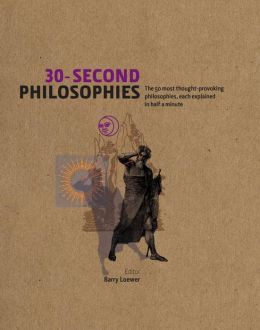
I have had an exceedingly philosophical day. I woke up this morning with a severe head cold and sore throat, and after a half-hearted argument for going to school, I was convinced to go back to sleep. Three hours later I awoke with a strong urge to ponder the universe and all it's mysteries. So I grabbed some mint-chocolate chip ice cream, swathed myself in a forest-green comforter, and proceeded to pour over my collection of religion and philosophy books. I started with 30- Second Philosophies by Barry Loewer.


I would most definitely recommend this book to anyone hungry for some food for thought. The title is slightly misleading, considering that the book is less philosophy and more some of the thoughts that make up philosophies: little tidbits of ideas for you to consider and perhaps decide to pursue further with other books. However, the text is succinct and to the point, with an abundance of examples to elucidate the sometimes abstract points it's making. Each philosophy has a long paragraph explaining the ideas, a "three-second thrash" which summarizes in a sentence what the page is about, and a "three-minute thought" that poses some questions to consider and approaches the philosophy from a critical standpoint. I wasn't in love with the art in the book, but the actual content was good, covering ideas from metaphysics to mathematical paradoxes to the human nature. With philosophical warm-up, I then tackled Sam Harris's book/ long essay Letter To a Christian Nation, which I spent the remainder of my day reading. 


I'd like to start by ascertaining that I consider myself to be agnostic. I don't follow any faith or religion, but I like to consider religions and the idea that there is something more there, and I am a certified philoceraptor. So I approached Sam Harris's book with an open mind, not prepared to scorn it or totally accept it. In Letter To A Christian Nation, Harris writes to his reader, a stereotypical Christian in modern-day America. He spends the book dissecting religion, poking holes in all the arguments put forth on behalf of Christianity in society. Harris has a very defined point of view; he believes that religion has no place in the modern world and that it is time for society to move on from it; worshiping is an antiquated practice. The arguments made in the book were solid, and pointed out the flaws that no one ever really talks about. It was an eye-opener, and I would definitely recommend it to people of all religions as well as atheists.

My only problem with this work, however, was just how certain the author was in his argument. He was very no-nonsense, and very extreme in his view as an atheist. He didn't leave any room for doubt, it was either take it or leave it with his ideas in the book. Every argument made by religion he smacked down with facts and percentages and assertive statements. I loved the book, and I think it's a good jumping-off point to form your own ideas about what he is saying, so I personally agreed with him but would add to his argument that there is always room in people's minds for philosophy and the consideration of ideas; while I believe that religion as it stands now is harmful to society and horribly twisted and corrupt in some cases, I don't think it is necessary to shut down faith. People should always be asking questions, including the question of is there is some kind of spiritual world out there, or some kind of something more. I think in some respects complete atheism is bad in that it's just another way of not thinking about ideas. 

Whether or not you are religious to any extent, I think that reading books like this can only be good for you, because it strengthens your own thoughts and arguments to hear those of other people. This was a short little book, and I read it in a few hours, so I would definitely put it on my must-read list, and I know that I'll be revisiting it in the future.

Search This Blog